GEORGE COOPER

Hardboiled noir with a sharp wit – for fans of Chandler, Hammett, and modern thrillers.

About the Author

George Cooper is a Hungarian author whose noir-inspired fiction blends hardboiled mystery with ironic humor. His debut novel, Private Business: Legacy, introduces a flawed but sharp-tongued private investigator caught between betrayal, survival, and a hunt for answers. Cooper’s style draws on the pulp tradition while adding a modern, witty edge.

About the Books

Private Business: Legacy

(first book in the Private Business series)

What starts as a search for a missing heir spirals into a deadly game of deception, double-crosses, and dangerous women. With more bullets than lucky breaks, our reluctant PI must rely on his wits, his cynicism, and his questionable allies to stay alive. A witty, hardboiled mystery in the classic pulp tradition – perfect for fans of Chandler, Hammett, and modern noir thrillers.

Chapter 1

…the beginning of a beautiful friendship…

„Cheers, young man!”
„But sir, that’s my beer!”
„All the better,” said the drunk, hiccupping, and he downed it in one go. „If you’re offering, I won’t say no.”
The young man stared in stunned silence, clearly struggling to process this pure, almost childlike level of audacity.
„But I hadn’t even had a sip!” he protested.
„I know,” the drunk nodded, examining his new host with the empathy of a seasoned social worker. „Wouldn’t have accepted it if you’d already drunk from it.”
For a brief moment, the bewildered half of this absurd little exchange gazed at his now-empty glass as though it were a cheating lover, then sighed and gave in to the inevitable.
„Well, I suppose I’ll just have to order another one,” he muttered, summing up the relationship so far.
„Great idea!” the older man beamed. „But make it two—you look like you could use one too. I’m Bill, by the way.” He grabbed the young man’s hand with both of his and began shaking it like it was a sacred ritual.
„Tom,” the younger replied curtly, jerking helplessly in Bill’s grip and bouncing on the worn-out barstool like a startled rider in a haunted house attraction.
I always liked old Bill. His friends called him „Leech”—a nickname he earned honestly. He could sniff out a fresh mark faster than a cheetah on the hunt, latch on with impressive determination, and drain them with a flair all his own. I couldn’t hold it against him. Sometimes, I even bought him a drink myself. Today, though, he’d clearly found a generous new sponsor.
I sat back in the armchair by the window and watched the impromptu theater unfold. The kid might have started sensing he’d walked into a trap, but he clearly hadn’t realized just how deep he was in. Leech’s greatest trick was how harmless he could make himself seem.
„What are you drinking, young man?” Bill asked generously, slapping Tom on the back so hard his glasses slipped off his nose and clattered onto the bar. One lens popped out, took a quick roll, and vanished into the sticky shadows on the filthy floor.
Tom looked to the ceiling as if for divine intervention, took a deep breath, and dove—gracefully, like a seasoned pearl diver.
It was a bold move. Around here, cleanliness was not a local custom. The grimy floor was likely home to generations of insects and spiders who had never known a broom. But lo and behold, after a brief expedition, Tom resurfaced—breathless but triumphant—lens in hand, and drew appreciative grunts from the crowd as he pulled a pristine handkerchief from his pocket and began wiping it clean.
Bill admired the kid’s finesse for a moment, then turned to the bartender and bellowed:
„Hey, spawn of Satan! Two beers!”
„I’ll just have a spritzer,” Tom added meekly, still polishing the lens.
„Fine, a spritzer too, with the beers!” Bill roared. „Make it fast, I’m parched!”
„Shut it,” grunted the bartender and—without missing a beat—spit neatly between his front teeth, landing it right on the freshly wiped lens. Tom sighed and started again.
Beer foamed into mugs. The barman slammed them on the bar and a crack sounded. Tom froze mid-polish. Bill fished out the broken glasses from beneath one of the pints, flicked away the shards, straightened the bent frame, and perched it proudly on his nose.
„Perfect! Crystal clear!” he announced, grinning.
There are moments when a person thinks things can’t possibly get worse. Of course, they usually can. I imagine Tom thought he’d already hit bottom. And sure, it’s easier to be wise from the outside—and less painful, as the folk saying goes about whipping nettles.
Tom sighed—the kind that’s only healthy in fresh air—pressed the half-lens to his eye like a stubborn monocle, held it in place with a determined grimace, and reached for his untouched spritzer.
Now that I could get a better look at him, it was obvious he was overdressed for this dingy, loyal-to-its-locals kind of joint. Dusty black dress shoes, dark socks with a red geometric splash just above the ankle, navy suit, white shirt, and a neatly knotted tie. The suit was off-the-rack, so probably not expensive, but he looked clean, well-groomed—like someone with a decent job. And clearly someone who’d never ventured this far into the suburbs.
Bill finished both beers and let out one of his signature, window-rattling belches. He then picked up a still-smoldering cigarette butt from the floor and tucked it into the corner of his mouth with the elegance of a man lighting a fine cigar.
„So what brings you here, son?” he asked, going for another backslap.
Tom ducked just in time to save his remaining optics. Bill, off-balance, slid off the stool, flailed wildly, and cleared the bar in one grand sweep. The bartender cuffed him back into place with one practiced blow. Bill swallowed the butt.
„I’m looking for someone,” Tom said, waiting to confirm that the floor routine was over.
„To kill him?” Bill hiccupped, still trying to coax the cigarette into his stomach.
„What? No!”
„Hey, I’m not judging. I’m just asking.”
„I work for an insurance company. I’ve been hired to track down an heir.”
„Ahh,” Bill nodded. „How lucky! Someone croaked and left him money? What’s his name? Where does he live?”
„All I have is the name—Leslie Morton. No address.”
„Well then, long live Leslie Morton!” Bill cried, raising the glass and draining a spritzer.
That was when Romero—the otherwise pleasant robber-murderer and the original owner of spritzer—punched him so hard the battered glasses finally gave up the ghost.
„I don’t know much more,” Tom went on, unfazed, helping Bill back to his feet. „He was a lawyer. Used to work in a big firm downtown. Then one day he just… quit. Moved out here.”
The name and that short bio stirred something in me. Up until now, this had just been fun to watch. Suddenly, I was paying attention.
„What happened to him after that?” Bill asked, readjusting his mangled specs.
„That’s just it. I’ve got his old address, but he left a few months later. That was two years ago. It’s like he vanished.”
„Nah, not the earth. They don’t bury the dead around here,” Bill said wisely, squinting hard. „They throw ’em into the sea. But don’t give up, kid—there are plenty of ghosts wandering this neighborhood. I can help. I know someone who knows everyone.”
„A cop?”
„A cop? Bleh!” Bill spat, then immediately vanished behind the tables, courtesy of another well-placed punch—presumably from Romero again. Limping to his feet, he moaned,
„Let’s get out of here. Everyone’s so touchy today.”
„I agree,” said Tom. He tossed some bills on the table and helped Bill stagger out, careful to keep a buffer zone between them.
I followed. Quietly. As usual.
***

Private Business: Enemy from the Past

(second book in the Private Business series)

Dave Baxley thought he could keep trouble at arm’s length.
He was wrong.
What begins with a grieving widow looking for her husband’s killer quickly spirals into something far more dangerous—blackmail schemes, deadly femmes fatales, and a retired intelligence officer obsessed with missing biological weapons.
And just when Dave thinks his schedule can’t get any worse, the past comes knocking.
A long-lost secret agent resurfaces, bringing with him a trail of bodies—and a magnetic weapon that could tip the balance of power.
Caught between mobsters, spies, and women as irresistible as they are unpredictable, Dave starts to realize he’s just a pawn on someone else’s chessboard.
But pawns have a nasty habit of changing the game.
Fast-paced, witty, and packed with razor-sharp banter, Private Enemy from the Past is a hardboiled noir thriller that blends classic grit with unexpected twists.

Chapter 1

Curtain Up


“I didn’t kill my husband.”

Well, at least we had something in common, I thought, as the woman who had just barged into my life with that declaration settled herself on the other side of my desk, legs crossed provocatively. Her business card revealed the name Amanda Leichardt, embossed with a feminine silhouette curling around the fire-red letters. Aside from that, only a phone number gave the faintest clue how to reach her.

“Mind if I light up?” she continued her introduction, and without waiting for my refusal, produced a slender, pencil-thin cigarette. The little stick was mostly paper, with a thread of tobacco barely thicker than a pencil lead—clearly recycled, the pricey part being mostly fluff.

“Got a light?” she asked, expectantly.

“I quit six months ago,” I said, meaning every word, though my quiet rebellion seemed to register not a whit in her soul. “Maybe I have a box of matches somewhere,” I admitted a few seconds later, succumbing to the pressure of sudden silence.

I opened my drawer, and from behind the cinnamon-scented candles I fished out the spark for intimate moments. The red glass candleholder beside it made a perfectly serviceable ashtray. I circled the desk and offered fire to the lady, who had surely turned more than a few heads in her time. Granted, thanks to plastic surgery, she might still have admirers among those who preferred sculpted over natural.

She exhaled a plume of smoke with visible relief.

“What cologne is that?” she asked. “A little sweet… doesn’t quite match your style.”

“It suits me best,” I replied. “Now, tell me about your husband. What happened?”

“He died,” she said, tiredly.

“I guessed that much from the fact that you didn’t kill him. You know… routine.”

“My situation isn’t exactly amusing,” the woman corrected me, eyes narrowing as she sized me up. I began to understand why her husband had taken the easy way out.

“Suicide?” I offered the most obvious deduction so far. The former bombshell might have sensed my reasoning but didn’t comment.

“The coroner says he was murdered,” she replied after a brief pause.

I leaned back in my rolling leather chair, crossed my ankles, and waited for her to continue. Long minutes passed in silence; even the quiet seemed to nap.

“I found him in our bedroom,” Amanda Leichardt finally broke her own stillness. I nodded encouragingly, prompting her to resume her story with slightly less hesitation. “He was lying on the bed in nothing but his underwear, and the blood trickling from the wound in his chest had soaked the sheet, the mattress… even the rug beneath the bed.”

Suicide was off the table, clearly.

“So you found him. The murder weapon was there too?”

“No,” she shook her head, then attempted smoke rings with the fish-mouth technique. I waited for her to tire of the pointless display—or for the pencil-casket of a cigarette to burn out. The latter happened first. I had to conclude that her brainpower wasn’t tied up in smoke-ring production—she simply didn’t care about this case. After all, it was only her husband who’d been killed, and she was the prime suspect.

“Why come to me?” I tried. She shrugged, chewing gum. Smacking, I concluded. I enjoyed the intimate, smacking interlude for a full two minutes, until Amanda finally made other noises besides mastication.

“My lawyer suggested it.”

“May I ask who?”

“Derek.”

I ran a quick mental check and only one name remained on my list.

“Derek Murray?”

She nodded, confirming my guess. Not that it mattered much. Derek Murray wasn’t among my favorite attorneys—truth be told, I had no favorites in that field.

“Maybe I should talk to him myself.”

“I think so too,” she nodded, then gestured toward me like summoning a taxi. You simply don’t ignore that motion. “My card,” she added, noticing my hesitation. “Give it back, and I’ll write Derek’s number on it.”

She produced her phone and, with sharp, elongated nails, jabbed at the touchscreen in every direction. Soon, the number migrated onto the business card, which then fluttered back to me.

“Call Derek today! Negotiate the fees too.”

She stood, lifted her head in place of a nod, and clicked her four-inch heels across my office floor. A heavy, oppressive scent lingered in her wake.

 ***

Future Projects
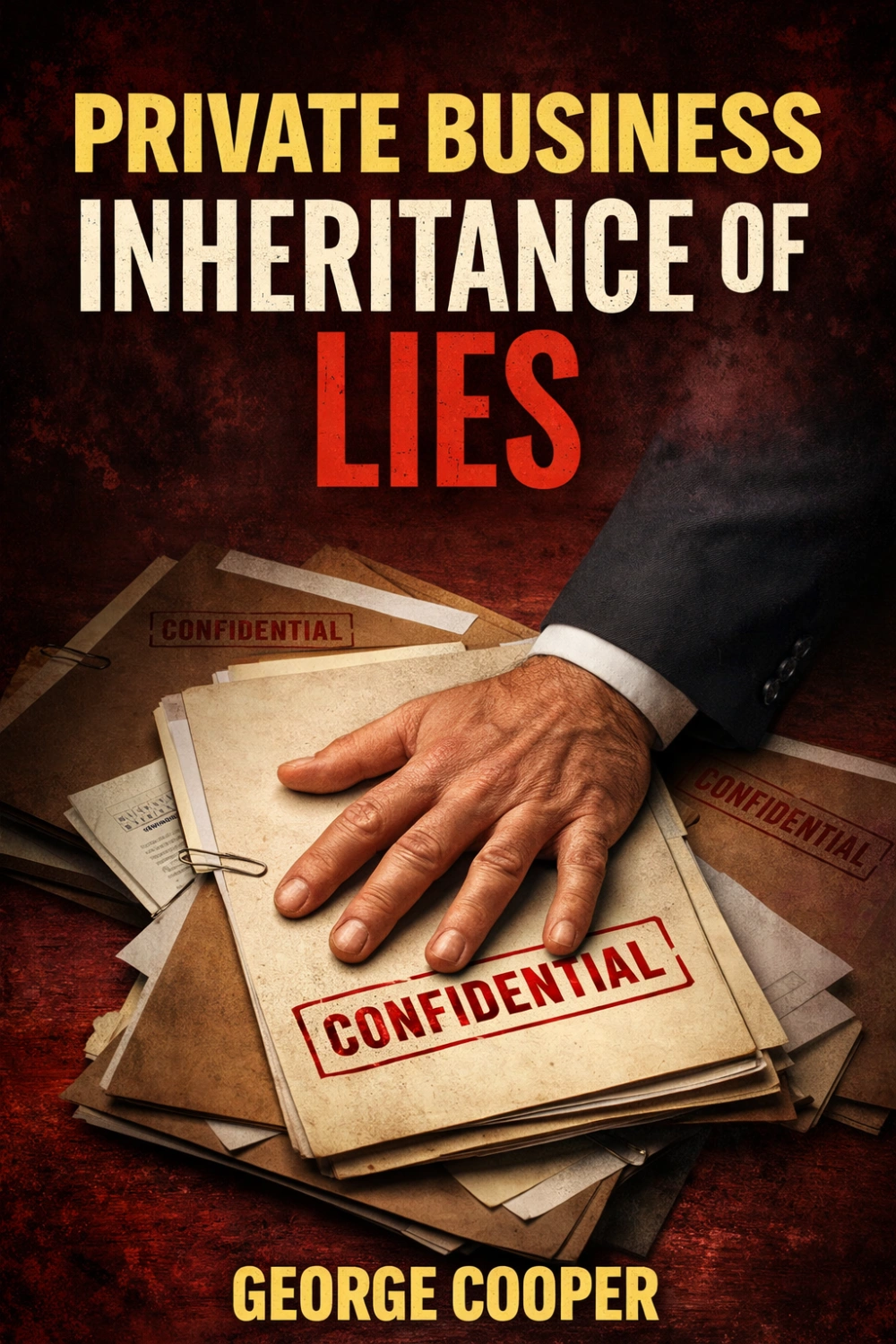
Private Business: Inheritance of Lies

coming soon

Contact

For media inquiries, collaborations, or rights, please contact:

bodnar64gyula@gmail.com